Story highlights
-
Sequences
The spike comes on the third message
Jim’s clients see the most replies on the third message of a sequence, not the first.
Watch at 2:35 -
Calls to action
Make the next step one click
Interest buttons, a Calendly link and a 60-second ask make it easy for candidates to respond.
Watch at 3:46 -
Budget
Reclaim unused LinkedIn seats
About 20% of the LinkedIn licenses Jim once managed were never really used.
Watch at 7:53
Jim Schnyder on drip sequences, calls to action and cutting LinkedIn Recruiter spend
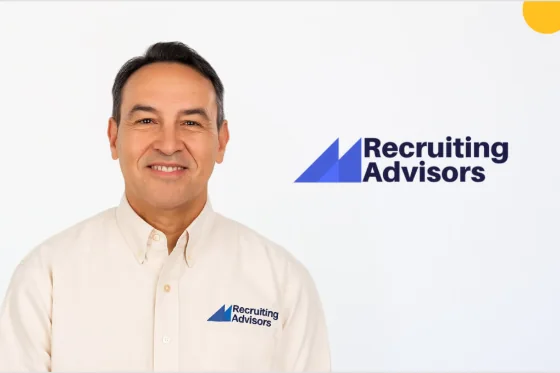
Jim Schnyder started Recruiting Advisors, a boutique consulting firm that specializes in HR technology and CRM and ATS implementations, about six years before this video. Before that, he spent 17 years at PepsiCo in sourcing and recruiting, including as global process and tools lead. He’s a past SourceCon Grandmaster and has served on the board of ATAP. In this speakEZ, he shares his favorite engagement tips, and one way to find budget for new tools.
Why the third message matters most
Jim’s first tip is never to stop at one message. He likes to see at least three: a first outreach, a “Hey, what happened? Did we miss you?” and a final follow-up. hireEZ lets you set up sequences with as many steps as you want, and his clients’ results show why it matters:
“In working with clients, we have seen that the spike is not so much on the first outreach. It’s actually on the third.”
 Jim SchnyderPresident, Recruiting Advisors
Watch at 2:35
For help building one, see How to craft high-performing email sequences that actually get responses.
Think like a marketer
Recruiters used to messaging people on LinkedIn often struggle with email, which is much closer to a cold outreach. Jim’s advice:
“You have to think like a marketer. You have to think like someone that’s in your recruitment marketing team, if you have one.”
When clients tell him they’re not getting a return on their sequences, his first question is “What is your call to action?” Usually, they don’t have an answer.
Make the call to action a click
In hireEZ, Jim recommends two calls to action at the bottom of each message: buttons that let candidates say they’re interested in hearing more about the opportunity, and a Calendly link so they can book time on your calendar. Compare that with “Let me know if you’re interested,” which still leaves the candidate to write a reply:
“If you make it so simple, just click, click, they’re in and out within 30 seconds.”
The 60-second ask
Personalization is key, Jim says, even if it’s hard to do in a sequence. The other must-have is a message that’s time-sensitive:
“I am known for what I call my 60-second ask.”
He asks candidates to take 60 seconds to say whether they’re interested, or to set up a time to talk. That way, they know the next step won’t take 45 minutes, and click-through rates go up. Find more ideas in 6 proven ways to improve candidate engagement.
Finding budget inside a static budget
Jim’s last tip is about money. Many companies give a LinkedIn Recruiter license to every recruiter. When he managed those licenses as an admin for a large corporation:
“I noticed that about 20% of those licenses were never really maximized or used.”
His team would sometimes turn licenses off and see how long it took anyone to notice. If your contract allows it, reducing LinkedIn Recruiter spend can free up money for consulting, tools and technology. Read How HatchWorks reduced LinkedIn Recruiter spend by 61%, or compare options in The top 7 LinkedIn Recruiter alternatives.
Key moments
Transcript
Jim Schnyder, President of Recruiting Advisors. From the video’s captions, edited for readability.
Hi, I’m Jim Schnyder, and welcome to my speakEZ.
Hi, I’m Jim Schnyder with Recruiting Advisors. I started my company about six years ago. It’s a boutique consulting firm. We have eight consultants and are continuing to grow. We specialize in HR technology, and helping with implementations of CRMs and ATSs. I’ve also been on the board of ATAP, the Association of Talent Acquisition Professionals. And I spent 17 years with PepsiCo, where I was in sourcing and recruiting. I was also the global process and tools lead, where I helped out with the operating model and all of the processes and technology globally for the company.
So today, what I’d like to be able to do is share some of the things that I’ve learned over the years, and some tips and some tricks, not only talking about how to help engage candidates, but also with budgets, and the ways that I see industry trends happening, to be able to find funds and money for tools and technology in HR. So let’s get to it.
So as a past Grandmaster from SourceCon, I constantly get asked about what are some of my tips and techniques and best strategies for engagement, drip campaigns, et cetera. So that’s one of the things I’ve done throughout my career. One of the things that I will tell you, and what makes a big difference, is sequences. One of the things that I absolutely love about hireEZ, and when I am helping with consulting and educating clients on leveraging, whether it’s their own systems for outreach and engagement or whether it’s hireEZ, is the importance of sequences. It’s the importance of not just a one-and-done outreach. I like to see at least three messages, and I think that’s normal in drip campaigns, right? You want to have one that’s a first outreach, two that is, “Hey, what happened? Did we miss you?” and three, kind of a final follow-up or something like that. hireEZ allows you to be able to set up sequences, if you want five, you want three, you want two. But in working with clients, we have seen that the spike is not so much on the first outreach. It’s actually on the third. And if done well, you can get your numbers from your sequences and have people follow up. And so that’s why it’s so important to have a drip sequence.
Now, when I’m working with clients, one of the things that I do hear and see is that people will go to messaging like they always have. If they’ve been using LinkedIn, they’ve never had to do what I would call almost a cold outreach, because you’re sending an email to someone, not a message to somebody that’s already on a platform. And the thing that you have to do is you have to do it just a little bit differently. You have to think like a marketer. You have to think like someone that’s in your recruitment marketing team, if you have one. And what that means is you have to have a strategic call to action. You have to make it to where it is a no-brainer, like the Easy Button: press this. What am I supposed to do when I finish reading your message?
When I go through with clients and they’ve said, “Hey, I’m not getting the return on my outreach and my drip sequence,” I immediately say, “What is your call to action?” And they usually don’t have an answer. And one of the things I love about hireEZ, and a lot of people may not be leveraging this as much as you can, is there are some great calls to action that you can leverage at the very end, down at the bottom. You can do a couple of things. So when I’m helping my clients to improve their results and their click-through rates, the thing that I always recommend is the call to action that you can have, which is the “Are you interested? Do you want to hear more about this opportunity?” buttons down at the bottom. That’s the first thing. The other one is that hireEZ actually allows you to connect Calendly to the system, which then allows the individual to book a time on your calendar. Make it super simple for them, and have a call to action at the end of your sequence.
Make it super simple, because too many times I see where someone will say, “Hey, let me know if you’re interested.” That’s not really a call to action. That’s not driving them to do something. Now they’ve got to reply to you, maybe, if they have an interest. But if you make it so simple, just click, click, they’re in and out within 30 seconds. So make it super simple for them with a call to action. That works very well, and I would tell you that your results will increase tremendously.
One last thing that I do want to make sure that you are aware of, and that I share whenever it comes to sequences or whenever it comes to recruitment messaging: obviously, I think people know personalization is key. Try to make it personalized to the individual. Try to say something that makes it to where they’re not just a number, and you’ve actually done a little bit of homework on them. With sequences, that’s always tough to do, because you’re not able to get into the personalization, but if you have a capability and a way of doing that, that’s always very beneficial.
But the other piece that’s so important is to make sure in your messaging that it’s time-sensitive. And I am known for what I call my 60-second ask, where I always try to say, “Hey, I’m Jim Schnyder, reaching out to you. I wanted to find out if I could take 60 seconds. Could you do this? Could you do this?” So in your call to action, just say, “Can you take 60 seconds and let me know if you’re interested or not? Can you take 60 seconds and do this? Would you take 60 seconds and set up a time to talk to me?” That way, they know it’s not going to take 45 minutes for them to fill out an application, or that they’re going to need to do something else. But if you’re setting a time parameter of, “Can you please take one minute out of your time to do this next step?” I think it’s very beneficial. And you’ll see, again, your results and your click-through rates, and the clicks on the call to action for what you want them to do, increase. So hopefully that helps.
Another way that I see companies leverage budgets, in order to make sure that they can have additional HR technology or tools, is to look at being a little creative with their static budgets, meaning that you don’t have additional dollars and cents to be able to spend, because you’ve been given a set budget. And what I see a lot of times is that there are corporations and companies that will give LinkedIn licenses to all of their recruiters. When I used to manage these as an admin for a large corporation, I noticed that about 20% of those licenses were never really maximized or used. And we used to have a methodology and a process where we would take some of those licenses, and we would actually sometimes turn them off, and see how long it would take for people to realize their license had been turned off. But there were some situations where, if you’re looking for a budgetary capability of being able to have additional money, you could, if your contract allows for it, reduce your LinkedIn Recruiter spend, in order to have additional money for consulting, for tools and for technology. And that’s one play that I see a lot of clients and customers leverage in order to create money for new opportunities, tools and tech within a static budget.
So hopefully you’ve learned a thing or two about trends, budgets, engagement strategies, calls to action, et cetera. If you have more interest in learning about how to integrate systems, or maximizing your outreach from some of your drip sequences or whatever, you can always talk to your account rep at hireEZ. I’m also available: Jim Schnyder, Recruiting Advisors, with an O-R-S. So hopefully you’ve appreciated the kind of one-way fireside chat that we’re having here, but it’s been my honor to have you in my home today for the speakEZ. And happy hunting.